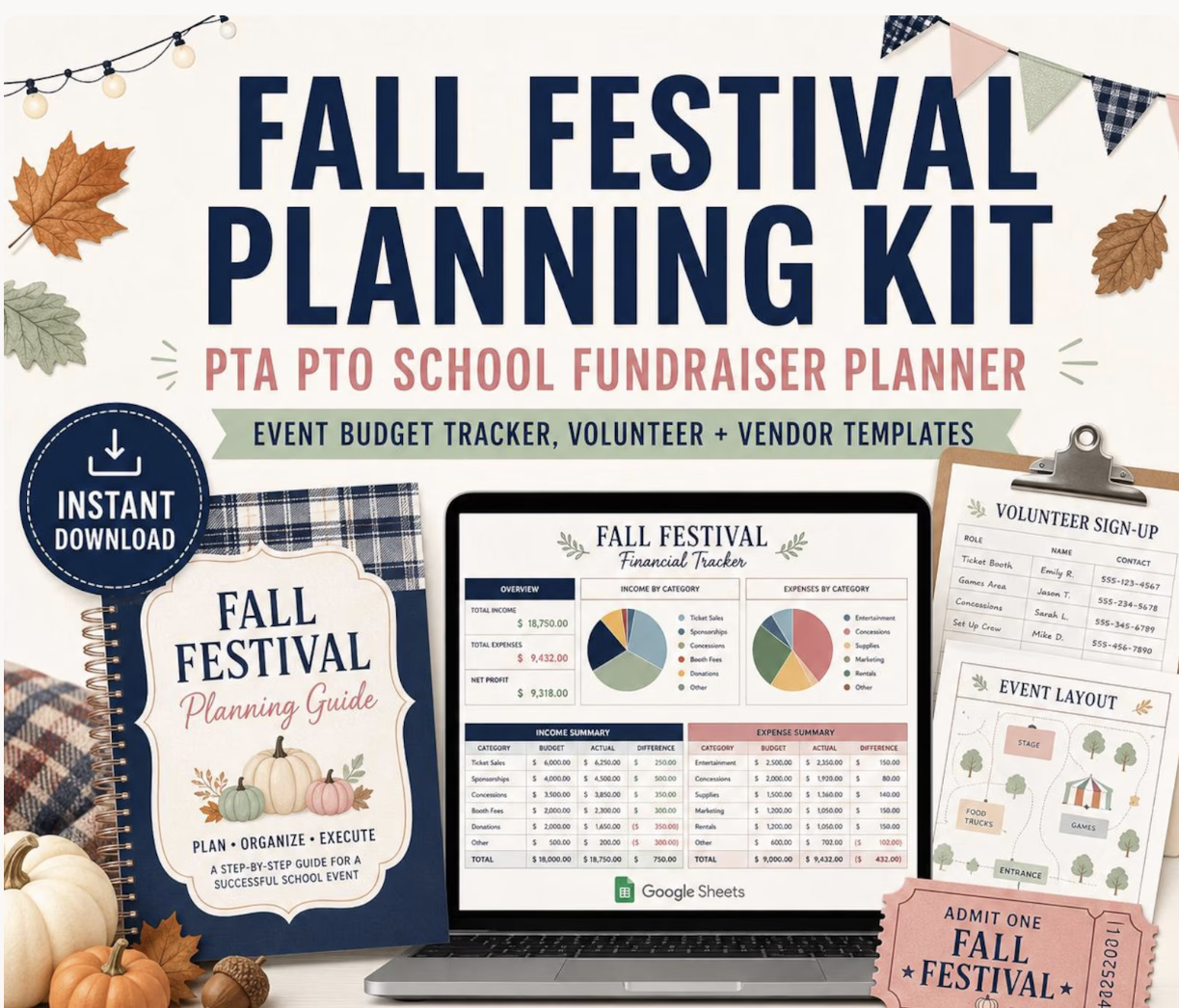
This fall festival planning checklist works backward from your event date, because a fall festival is one of the biggest wins a PTO can pull off in a single day — and one of the easiest events to under-plan. It looks simple from the outside: some games, some food, a pumpkin or two. In reality it's a dozen small decisions that all have to land in the right order, and most of them need more lead time than people think.
Here's how to work backward from your festival date so nothing gets left to the last week.
Lock the Basics
This is the foundation everything else builds on, so don't skip ahead until it's done.
- Set the date and rain plan. Check the school calendar for conflicts (sports, testing weeks, other PTOs' events nearby) and pick a backup date or indoor plan now, not the week of.
- Set a budget. Decide what you're working with before you start saying yes to vendors and rentals — this number shapes every decision after it.
- Pick a theme (optional, but decide either way). A theme isn't required for a good festival, but deciding now — even "no theme, just fall colors" — keeps decor and promotion consistent instead of thrown together.
- Confirm your venue and any permits. Parking lot, field, or gym — whatever it is, get it locked and find out if your district requires anything (insurance certificate, fire marshal sign-off) before you plan around it.
Vendors, Food, and Games
- Book any paid vendors or rentals — bounce houses, food trucks, a face painter. Fall is a busy season for these vendors, and the good ones book up.
- Decide your games and activities lineup. This is where a lot of committees lose hours reinventing the wheel — deciding what games, how many stations, what supplies each one needs, and who's running it. If you want this part handled instead of built from scratch, our Fall Festival Games Guide lays out ready-to-run stations with supply lists and setup instructions, so you're picking from a list instead of starting blank.
- Line up food. Decide if you're doing food trucks, a bake sale table, or a simple concession stand — and get any needed permits sorted now if you're selling food.
- Start sponsor/vendor outreach if you're doing booths. Local businesses need lead time to say yes and prep materials.
Volunteers and Promotion
- Open volunteer sign-ups with specific roles, not a vague "help needed" post. "2-hour shift running the ring toss" fills faster than "volunteers needed."
- Start promoting. Flyers home, a note in the school newsletter, social posts if you're active there — the earlier families see it on their calendar, the better your turnout.
- Confirm headcounts with any paid vendors. Numbers tend to shift as the date gets closer — lock them in now.
Tighten the Details
- Finalize your parking lot / venue map. Where do games go, where's food, where's the entrance — map it out so setup morning isn't a guessing game.
- Confirm all volunteer shifts and send a reminder with arrival times and what to bring.
- Order or confirm any signage, tickets, or wristbands if you're using them for games or food.
The Day-of Run Sheet
This is the piece that keeps the whole event from resting on one or two people's shoulders. Write out an actual run sheet: what time setup starts, who's arriving when, what time each activity opens and closes, and who's handling breakdown. Print it, hand it to your volunteer leads, and you've just turned "ask Sarah, she knows everything" into something anyone on the team can run from.
You've Got This
A fall festival can feel like a lot when it's still just an idea on a meeting agenda. Broken into weeks, it's a series of small, doable steps — and once you've run it once, next year's version gets a whole lot easier.
Brand new to the board this year? Pair this with how to run your first PTO meeting — it's where the festival vote usually happens.