Fundraiser or service?
Some schools run their holiday shop purely to raise money. Others run it as a gift to families — break-even or close to it, with the goal being that every kid gets to shop. Those are two different events with two different budgets, two different vendor conversations, and two different ways you’ll measure success in January.
Vendor or DIY?
A vendor brings pre-priced inventory and usually handles unsold returns — less setup work, less margin. Sourcing it yourself means more control over pricing and profit, and a lot more logistics on your plate. Neither is wrong. But picking late, after you’ve already committed to a timeline, is how shops end up scrambling in week two.
This isn’t unique to the holiday shop, either. Every fundraiser event your PTO runs — Mums Sale, Spirit Wear, Book Fair — starts with some version of these same two decisions before anything else gets planned. We’re breaking that down event by event, starting here.
Get the decisions right, and everything downstream gets easier: your timeline, your floor plan, your volunteer shifts, how cash moves through the room, and how you make sure no student gets left out when their family can’t shop that day.
Get them wrong — or skip them entirely — and you’re rebuilding your plan in the middle of December.
Want the full system instead of figuring it out as you go?
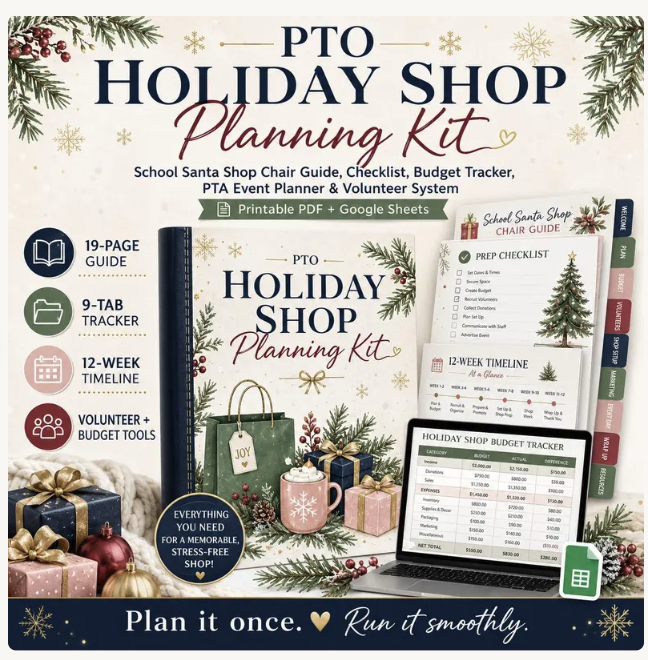
We built the Holiday Shop Planning Kit — a 19-page guide plus a 9-tab tracker covering the full 12-week timeline, floor plan layouts, volunteer scheduling, cash handling, and an inclusion plan so every child shops.
Holiday Shop Planning Kit
See the Holiday Shop Planning Kit →