What a treasurer report is for
Your report has one job: give the board a clear, honest picture of the money so they can make decisions. Can we afford the field trip buses? Did the fall fundraiser actually make money? Are we on track with the budget we approved?
It’s also your protection. A regular report, reviewed and recorded at each meeting, shows the board saw the numbers. That transparency is what keeps trust intact when questions come up later.
What belongs in a PTO treasurer report
Most solid treasurer reports cover the same core pieces:
- The reporting period. The dates the report covers, usually the month since the last meeting.
- Starting balance. What was in the account at the start of the period.
- Money in. Deposits, grouped into categories like fundraisers, donations, and membership dues.
- Money out. Expenses, grouped the same way, so the board can see where the money went.
- Ending balance. What’s in the account now, and whether it matches the bank statement.
- Budget vs. actual. How spending and income compare to the budget the board approved.
- Open items. Outstanding checks, pending reimbursements, or deposits that haven’t cleared yet.
Presenting it at the meeting
Hand out a short written summary rather than reading every line aloud. Hit the headlines: the ending balance, anything over budget, and anything the board needs to act on. Leave time for questions.
Then make sure the report gets attached to the meeting minutes or noted in them. That’s what turns your work into part of the official record.
Where new treasurers get stuck
The format isn’t usually the problem. Everything before the format is:
- Keeping up month to month. Receipts and deposits pile up fast, and catching up the night before is where errors creep in.
- Matching your numbers to the bank. If your report and the statement don’t agree, you need to know why before the meeting, not during it.
- Sorting income and expenses into categories that actually line up with your budget.
- Explaining the numbers in plain English to a board that mostly doesn’t speak spreadsheet.
None of these require an accounting background. They require a routine and a tracker that does the math for you.
Why your report is only as good as your records
A treasurer report is the last step, not the first. If your ledger is up to date and your categories match your budget, the report almost writes itself. If they’re not, no template in the world will save the night before the meeting.
That’s the real fix: a simple monthly routine and a system built for how PTO money actually moves.
Make your next treasurer report the easy part of the meeting.

If you want the complete system
Treasurer Kit for PTO/PTA
A 21-page treasurer’s guide covering the monthly close and report format, a Google Sheets command sheet with a monthly report tab that builds itself, and ten ready-to-send email templates, including a report cover note.
See the Treasurer Kit →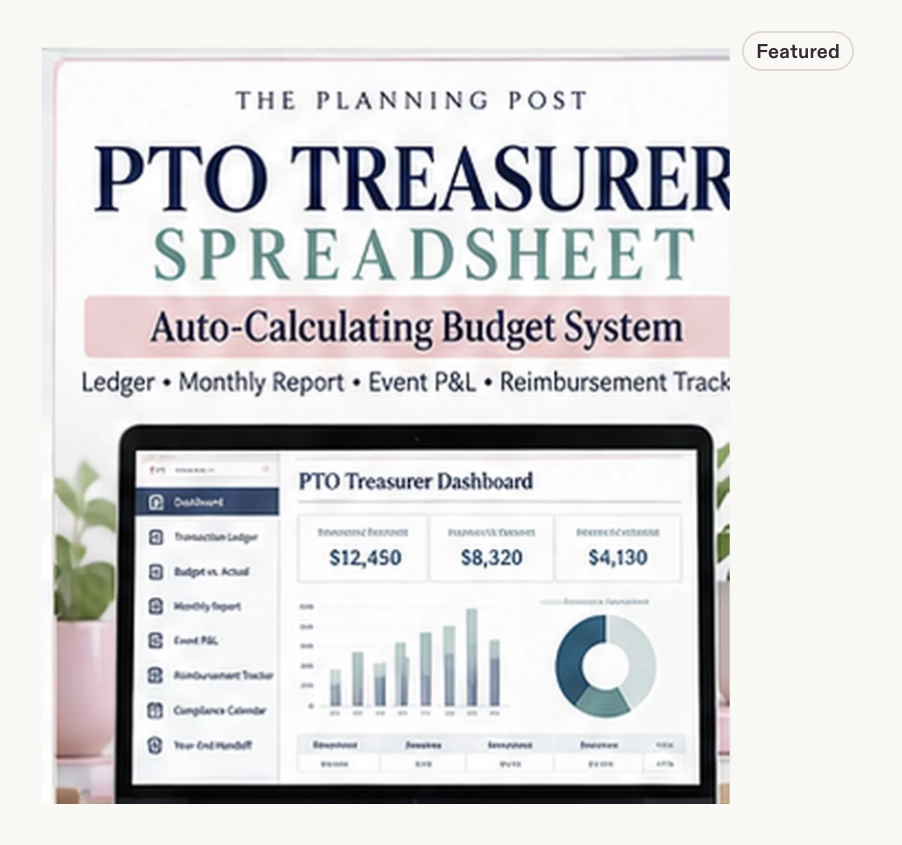
If you just need the tracker
Treasurer Spreadsheet for PTO/PTA
An auto-calculating Google Sheets system with a transaction ledger, budget vs. actual, monthly report, event P&L, reimbursement tracker, and year-end handoff checklist.
See the Treasurer Spreadsheet →