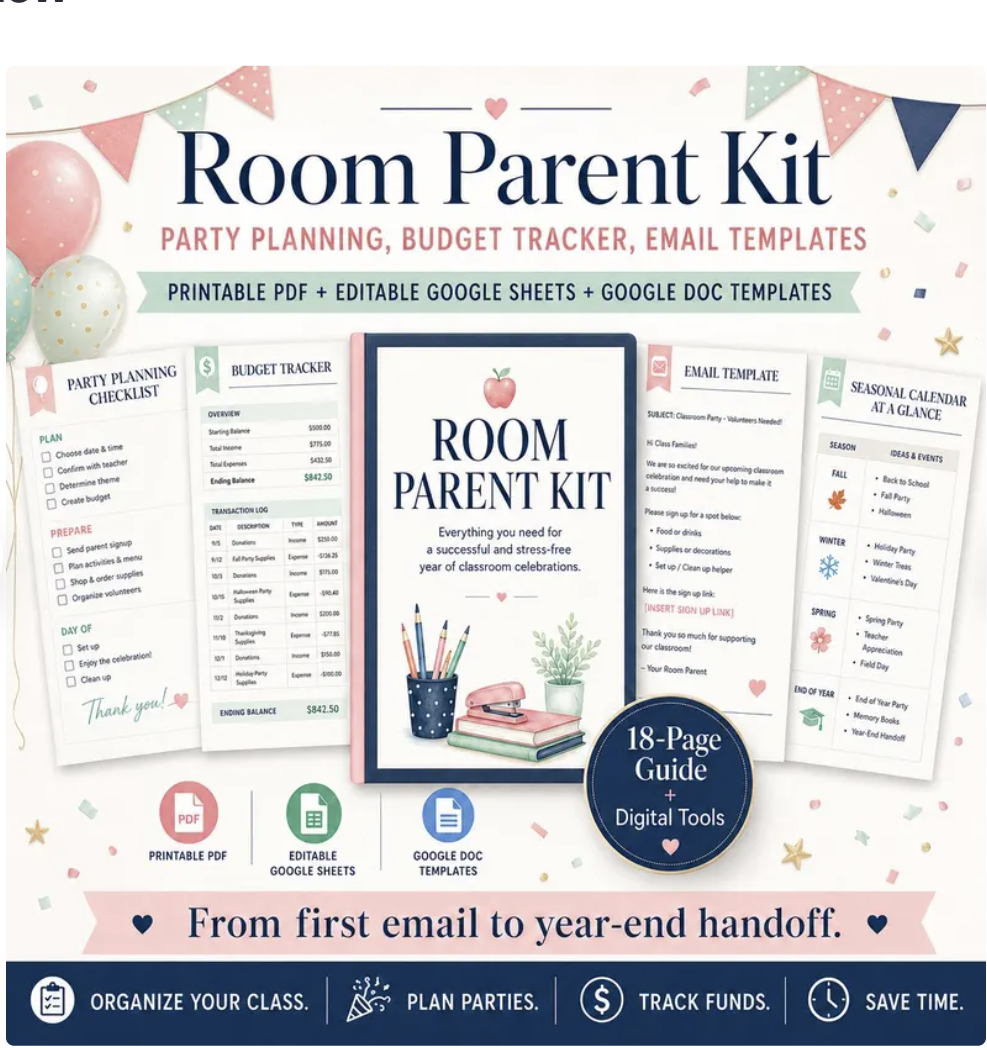
What the Room Parent Role Actually Covers
Strip away the folklore and the job comes down to four things:
- You're the bridge between the teacher and the class families. Not a second teacher, not an event planner by trade — just the person families hear from about parties, collections, and volunteer needs so the teacher doesn't have to run that on top of teaching.
- You collect and manage a class fund. A voluntary contribution from families covers party supplies and teacher gifts. You track what comes in, what goes out, and you can account for every dollar if anyone asks.
- You organize 3–4 classroom parties a year. Halloween, a winter/holiday party, Valentine's Day, and a year-end celebration are the standard four. You're not cooking or decorating alone — you're making sure supplies, volunteers, and a timeline exist so the party happens without a last-minute scramble.
- You coordinate teacher appreciation. A group gift for Teacher Appreciation Week and again at year-end, collected the same low-key way as the class fund.
That's it. Four responsibilities, most classrooms split them across a small team, and none of them require you to reinvent anything — just to run a simple, repeatable system.
What You Can Safely Decline
Room parent scope creep is real, and most of it comes from nobody ever saying the job out loud. A few things that are not your job, no matter how often they land on your plate:
- Field trip logistics. Permission slips, transportation, and supervision plans belong to the teacher and the school. Your part is limited to recruiting and confirming parent chaperones — that's the whole ask.
- Managing difficult parent situations alone. If a parent has a complaint about a party decision or wants more control than you're comfortable giving, you can acknowledge and redirect. You're a volunteer, not a mediator, and it's fine to loop in the teacher for anything bigger than a preference disagreement.
- Covering the gap when families don't contribute. If the class fund comes up short, you scale the plan down — you don't cover it out of pocket, and you never make a child feel singled out because their family didn't pay in.
- Being available on demand. A reasonable response window and a clear communication cadence are enough. You don't owe same-day replies to every message in the class group chat.
Saying no to the wrong asks is what makes it possible to say yes to the actual job without burning out by November.
The Two Messages That Do Most of the Work
Almost every room parent headache traces back to communication — either it didn't happen, or it happened too many times. Two messages, sent at the right moments, cover most of the year.
1. The Introduction Message (send within the first two weeks of school)
This one sets the tone before anyone has a reason to wonder who you are or what's coming. The formula is simple: say who you are, preview what families will hear from you and when, and invite questions. That's it — three short sentences, sent once, and most families won't think about room parent logistics again until the first party rolls around.
2. The One Reminder (send once, about a week before each party)
The instinct is to send three reminders. Send one instead — it respects everyone's inbox and works just as well. Confirm the date and time, thank whoever signed up for supplies or volunteering, and add any allergy or dietary note the school requires. Done.
That's the whole communication plan for most of the school year: one message to open things up, one message before each party to keep things on track. Everything else — collections, thank-yous, volunteer asks — follows the same short, warm, no-chasing pattern.