These Halloween classroom party ideas give you a mix of easy games, quieter activities, and a sample schedule you can adapt with the teacher. Choose a few that fit your class, assign your helpers, and leave time to clean up.
You do not need ten activities in one party. The list gives you options.
Start With Three Activities That Fit Your Class
A simple starting point is one active game, one creative activity, and one quieter game.
For example:
- Active: Feed the Monster.
- Creative: Build-a-Monster Drawing.
- Quieter: Halloween Picture Bingo.
With enough approved helpers, run them as rotating stations. With fewer helpers, choose activities the class can do together from their seats.
Before buying supplies, confirm the party length, student count, available space, and school rules with the teacher. Ask about food restrictions, volunteer approval, photography, and any adjustments students may need.
If your school prefers a fall celebration, use pumpkins, leaves, apples, and friendly woodland creatures in place of Halloween characters.
10 Halloween Classroom Party Games and Activities
1. Pumpkin Tower Challenge
Supplies: Orange paper or plastic cups and a clear tabletop.
How to play: Give each pair or small group the same number of cups. Challenge them to build a freestanding tower in 60 seconds. When the timer ends, everyone takes their hands away.
Allow about five to seven minutes for a demonstration, several rounds, and resetting.
Keep each group’s cups in a separate basket. This is a good choice when you want Halloween minute-to-win-it games for kids without a complicated supply list.
2. Feed the Monster
Supplies: A cardboard box, paper decorations, soft beanbags, and a floor marker.
How to play: Decorate the box with a friendly monster face and cut a large opening for its mouth. Students take turns tossing beanbags into the opening.
Allow five to seven minutes per group.
Set the station away from doors and walkways. Assign a helper to retrieve beanbags and keep turns moving.
3. Halloween Picture Bingo
Supplies: Picture bingo cards, a calling sheet, and large paper markers.
How to play: Call out pictures such as pumpkins, cats, bats, and friendly ghosts. Students cover matching spaces on their cards.
Allow seven to ten minutes for a short round. A single completed row is a simpler finish than covering the whole card.
Picture bingo is a useful seated activity when you need a calmer change of pace.
4. Ghost Bowling
Supplies: Paper cups with ghost faces, a soft ball, and a clear floor area.
How to play: Arrange the cups in a small pyramid or bowling formation. Students roll the ball toward them, then help reset the cups.
Allow five to seven minutes per group.
Use rolling rather than throwing. Have one helper manage the ball and reset area.
5. Build-a-Monster Drawing
Supplies: Paper, crayons, and a die.
How to play: Each number adds a feature:
- 1 — an eye
- 2 — an arm
- 3 — a leg
- 4 — a horn
- 5 — a silly mouth
- 6 — a funny accessory
Roll eight to ten times and let students create their monsters. Finish by giving each monster a name.
Allow seven to ten minutes.
An adult can roll one die for the whole group, reducing the supplies you need.
6. Pumpkin Patch Memory Tray
Supplies: A tray, a cloth, and six to ten classroom-safe seasonal objects.
How to play: Let students study the tray, then cover it. Ask them to name, write, or draw the objects they remember.
Allow five to seven minutes.
Use objects large enough for everyone to see. This works well as a quiet station or a whole-class activity.
7. Monster Freeze Dance
Supplies: Teacher-approved music and enough space for students to move comfortably.
How to play: Students dance or move in place while the music plays, then freeze when it stops.
Allow three to five minutes.
Keep everyone participating instead of eliminating students. Offer seated movements and keep the volume comfortable.
8. Halloween Charades
Supplies: Simple action prompts, written or pictured on cards.
How to play: Students act out picking a pumpkin, flying like a bat, walking like a robot, putting on a costume, or stirring an imaginary potion.
Allow five to seven minutes.
Students can choose to act or help guess. There is no need to make performing compulsory.
9. Paper Pumpkin Decorating
Supplies: Paper pumpkin shapes, crayons, stickers, and glue sticks.
How to play: Students decorate a pumpkin with a funny face, a pattern, or an original design.
Allow seven to ten minutes.
Have students put their names on the back before decorating. Keep supplies in small baskets and provide a place for finished projects.
10. Halloween “Would You Rather?”
Supplies: A short question list.
How to play: Read a question and let students vote by raising their hands.
Try:
- Would you rather have a pet dragon or a pet monster?
- Would you rather explore a pumpkin patch or a corn maze?
- Would you rather wear a funny costume or a spooky costume?
- Would you rather meet a talking pumpkin or a dancing skeleton?
Allow three to five minutes.
Keep this ready for early finishers, station resets, or the last few minutes of the party.
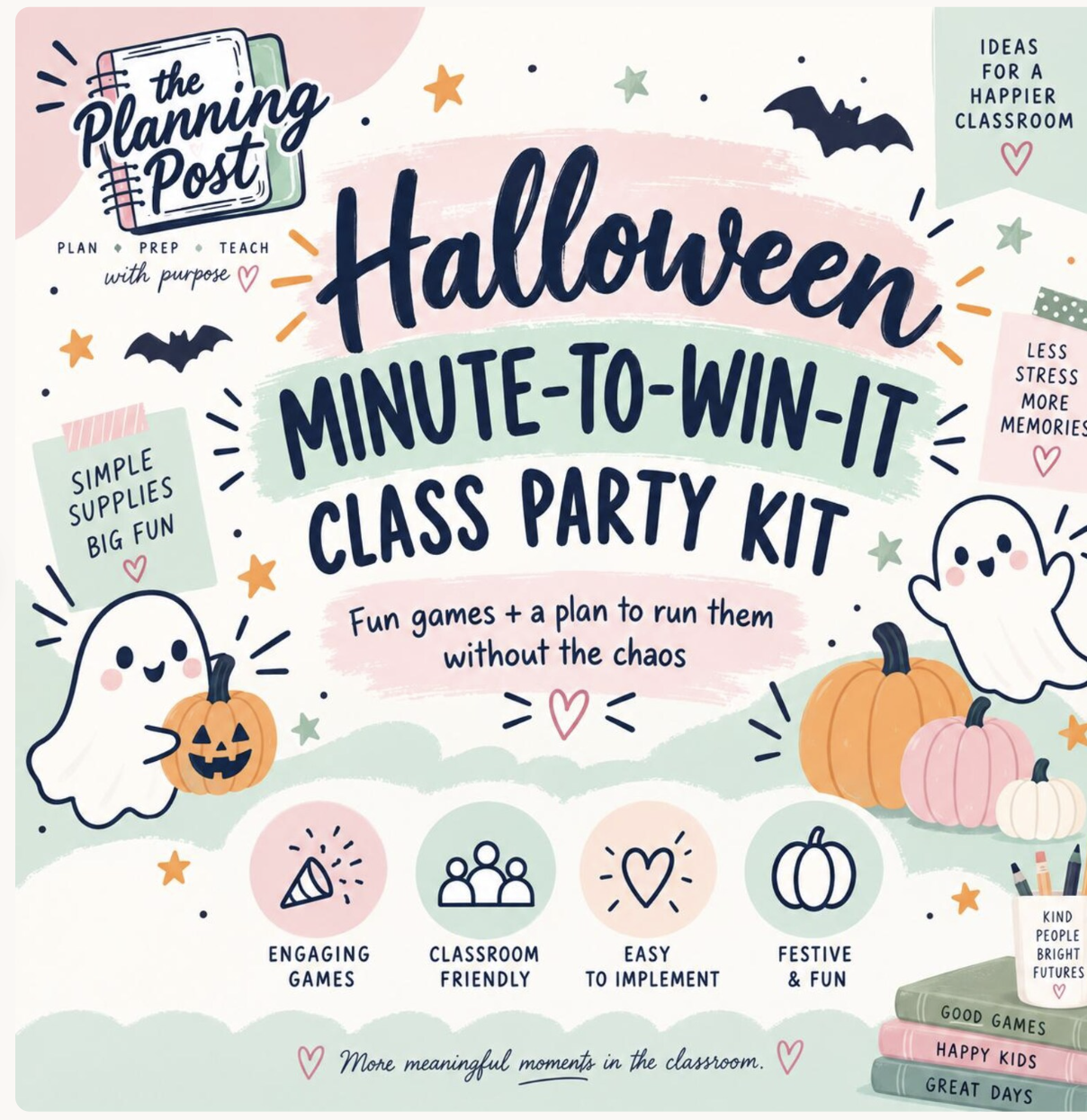
From The Planning Post
Want Help Choosing the Right Halloween Challenges?
Picking games is easier when you know which ones fit your students, available time, classroom space, and volunteer help.
The Halloween Minute-to-Win-It Class Party Kit brings that planning together. It includes:
- Multiple classroom-friendly 60-second challenges.
- Grade-specific recommendations for K–3, grades 4–6, and grades 7–8.
- Quick supply guidance and suggested party timing.
- Easier and harder adaptations.
- Classroom execution tips.
- Team and noncompetitive play options.
- Printable game-day reference tools.
- Separate quick-print grade roadmaps.
Use the recommended plan or mix and match for your classroom. The kit is delivered as printable US Letter PDFs, so you can print the pages you need. Game supplies are not included.
Browse Halloween class party resources →A Simple 45-Minute Halloween Class Party Schedule
This example uses three groups, three stations, and an approved adult leading each station. Prepare supplies before students begin.
| Time | What happens |
|---|---|
| 0–5 minutes | Welcome, explain activities, and divide into groups |
| 5–12 minutes | First station |
| 12–14 minutes | Reset and rotate |
| 14–21 minutes | Second station |
| 21–23 minutes | Reset and rotate |
| 23–30 minutes | Third station |
| 30–38 minutes | Teacher-approved snack or a whole-class game |
| 38–45 minutes | Clean up, collect projects, and reset the room |
If food is not permitted, use the snack window for charades, a memory game, or “Would You Rather?”
If you only have 30 minutes, choose two activities. Keep the welcome brief and reserve the final five minutes for cleanup.
A 60-second challenge also needs explanation, turns, and resetting. Plan for the whole activity, not just the timer.
Adjust the Party for Your Grade Level
Kindergarten Through Grade 3
Use visual demonstrations, short instructions, and simple turns. Picture bingo, monster toss, cup stacking, and pumpkin decorating are flexible starting points.
Offer cooperative play and enough adult support to help students move between activities.
Grades 4 Through 6
Try partner challenges, drawing prompts, memory games, and small-team competitions. Give students clear rules and a defined way to finish.
Let students help reset stations so the next group can begin promptly.
Grades 7 Through 8
Offer timed design challenges, harder charades, or team games with more choices. Give students some say in the activities and use themes that suit their interests.
Middle school Halloween activities can be playful without relying on younger-child decorations or prizes.
These are starting suggestions. Choose based on the actual class rather than grade level alone.
Give Every Parent Helper a Clear Job
Before party day, assign:
- One person to coordinate with the teacher.
- A leader for each station.
- Someone to organize shared supplies.
- Clear setup and cleanup responsibilities.
For a smaller party, one person may cover more than one job. The point is to make the responsibilities clear.
Send each helper their arrival time, check-in instructions, activity directions, supply assignment, and rotation schedule.
Make requests specific:
“Can you bring 30 orange cups by Thursday?”
“Can you lead the drawing station from 1:15 to 2?”
“Can you stay for the final ten minutes to help reset the room?”
Room Parent Responsibilities Go Beyond One Party
The Halloween party may be your first big task, but being a room parent often means coordinating help and keeping information organized throughout the year.
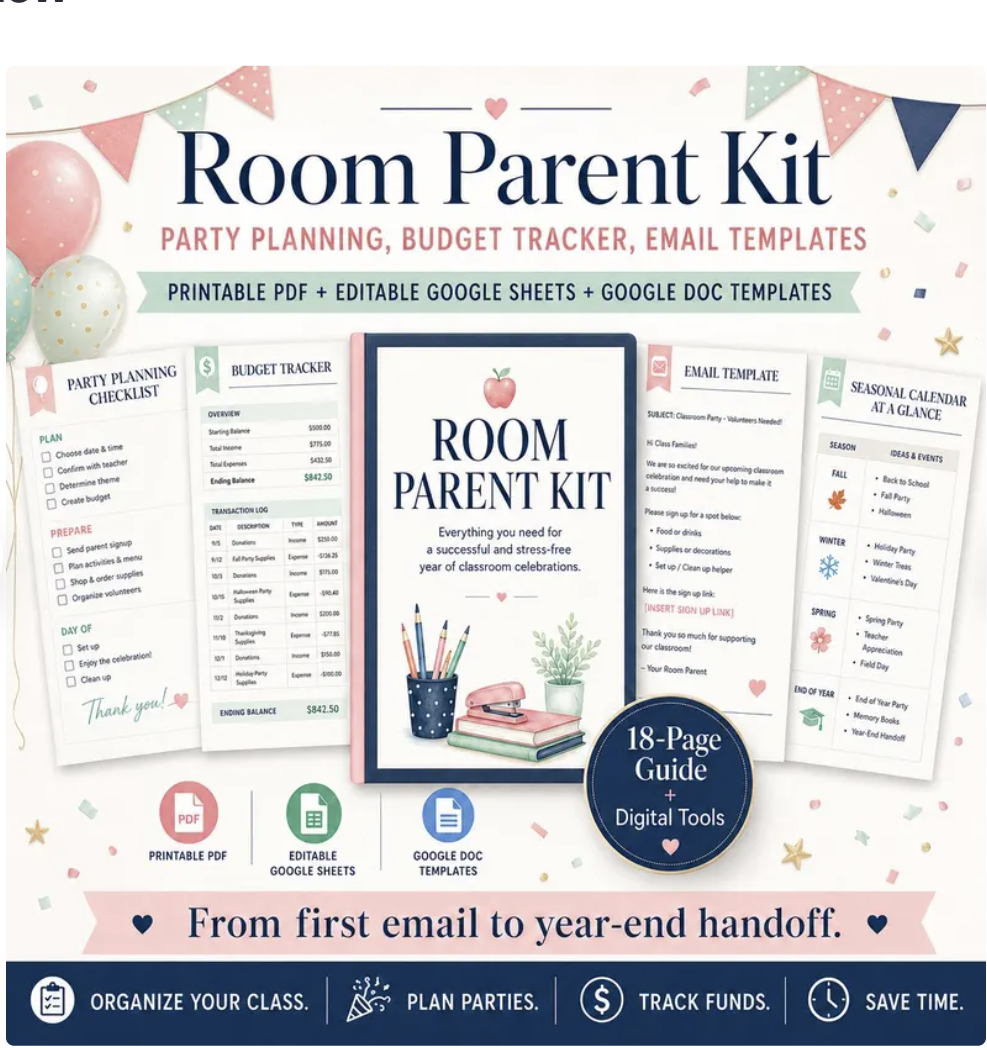
Our Room Parent Kit is a separate resource for that broader role. If you are looking for support beyond choosing Halloween games, explore the kit and its current contents in the shop.
New to the role? Start with our Room Parent Basics guide.
Common Halloween Class Party Planning Mistakes
Planning Too Many Activities
Choose a few games children will have time to enjoy. Keep one short backup activity ready.
Underestimating Transitions
Moving groups, explaining rules, and resetting supplies all take time. Include them in the schedule.
Leaving Helper Assignments Until Party Day
Send responsibilities beforehand so volunteers can arrive ready to help.
Assuming Snacks or Photos Are Allowed
Confirm school expectations with the teacher before requesting food or taking pictures.
Forgetting Cleanup
Reserve time to collect supplies, label projects, and return the classroom to its usual setup.
Halloween Classroom Party Questions
How many games should we plan?
For a 30- to 45-minute celebration, start with two or three main activities. Adjust for instructions, transitions, snacks, and cleanup.
What can we do with very few volunteers?
Choose seated or whole-class activities such as picture bingo, Build-a-Monster Drawing, memory games, and “Would You Rather?” Check with the teacher about the adult support required.
Can we run a Halloween party without food?
Yes. Use games, crafts, and a short whole-class activity instead. Follow the teacher’s guidance on treats and take-home items.
How can we include children who do not enjoy competition?
Use partner play, shared goals, untimed rounds, and creative activities. Give students choices about how to participate.
What if our school celebrates fall instead of Halloween?
Use pumpkins, apples, leaves, and harvest themes. Cup stacking, memory trays, bingo, and decorating activities are easy to adapt.
Planning a School-Wide Halloween Event, Too?
A classroom party and a trunk-or-treat need different plans. For your PTO’s larger event, use our Trunk-or-Treat Planning Timeline.
For the classroom, choose a few activities, confirm the teacher’s expectations, and give your helpers clear jobs. That gives you a party plan you can use—and time to enjoy the celebration.