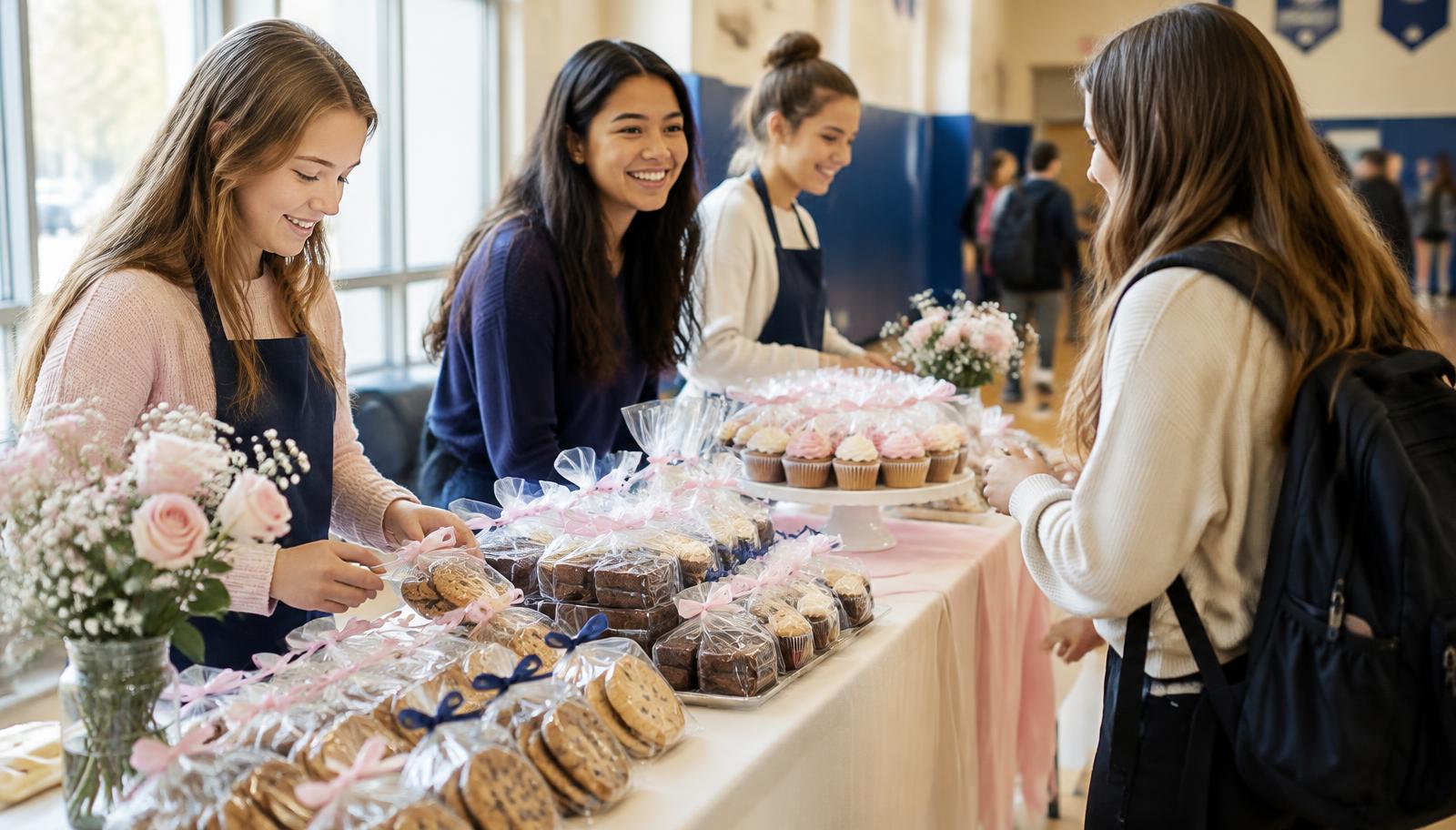
Somewhere along the way, school fundraising got complicated.
We’ve planned fun runs, silent auctions, themed family nights, and events with spreadsheets that could probably run a small business. And while those fundraisers certainly have their place, there’s something to be said for a few folding tables, a lineup of homemade treats (where school rules allow), and a group of parents willing to pitch in.
The good old-fashioned bake sale is still worth considering. It’s familiar, flexible, easy to pair with another school event, and doesn’t need a huge committee to get off the ground. The trick is keeping the event simple without leaving the behind-the-scenes details to chance.
Here’s how to make one work for your PTO, PTA, HSA, or school group.
Start with a small, clear plan
Before asking anyone to bake a single brownie, decide four things:
- Your purpose. Are you raising money for classroom supplies, a field trip, a grade-level activity, or the general PTO fund?
- Your audience. Will you sell to parents at a family event, spectators at a game, or the wider community? The crowd determines quantities and prices.
- Your location and timing. A table at an already-busy school event can be easier to manage than a standalone fundraiser. Get approval first.
- Your target. Even a modest goal helps you avoid asking volunteers to produce far more than you can realistically sell.
A bake sale doesn’t need to do everything. One table, a manageable menu, and a clearly defined selling window can be plenty.
What should you sell at a school bake sale?
Stick with familiar, easy-to-portion favorites. They tend to be simpler to price, display, package, and hand out.
- Cookies, individually wrapped or sold in small packs
- Brownies or blondies, cut into consistent servings
- Cupcakes with simple toppings
- Rice cereal treats
- Muffins or mini loaves, if suitable for the event
- A small selection of seasonal specialties
Rather than collecting 15 kinds of baked goods, try choosing four or five categories. Ask volunteers to sign up for specific items and quantities. “I’ll bring something” is well-intentioned, but it’s hard to plan around.
Important: Check your school’s rules, food handling requirements, and any restrictions on homemade items before setting the menu. Keep ingredient and allergen information available for each item, and never promise that home-baked items are free of cross-contact.
Bake sale pricing ideas: keep it easy to understand
You don’t need an elaborate pricing model for a small school bake sale. Use a short price list with round numbers, and adjust it for local costs, portion sizes, and your audience.
| Example item | Illustrative price |
|---|---|
| Cookie pack (2 standard cookies) | $2 |
| Brownie or blondie | $2 |
| Standard cupcake | $2 |
| Specialty decorated cupcake | $3 |
| Small assorted treat box | $5 |
These are starting-point examples, not recommended prices for every school. Check whether your audience is likely to pay them and ensure any purchased ingredients or packaging don’t eat up the proceeds.
A simple sign with prices saves volunteers from answering the same question over and over. If your school allows electronic payments, confirm the method and who’s responsible for tracking transactions before event day. Keep a cash option if it’s practical for your audience.
How much should everyone bake?
There’s no magic number. Begin with an estimate of how many people will stop by, how many may buy, and roughly how many items each buyer will purchase.
For example, if you expect 200 visitors, estimate that 35% will purchase two items each:
200 visitors × 35% expected buyers × 2 items = about 140 items.
You might plan approximately 150–160 portions with a modest cushion. That’s an illustration—not a promise of demand. Your school’s past event sales are a much better starting point if you have them.
Coordinate quantities across categories, not just total pieces. That way you don’t end up with 90 chocolate cupcakes and almost nothing else.
A realistic three-week bake sale timeline
Three weeks before
- Get school approval and confirm venue, hours, and applicable food-sale policies.
- Choose the cause and set a manageable fundraising goal.
- Appoint one coordinator and identify a small event-day team.
Two weeks before
- Send an item-specific baker sign-up with requested quantities and drop-off instructions.
- Confirm tables, signs, payment method, cash handling, packaging, and supplies.
- Publicize the bake sale through approved school communications.
One week before
- Check gaps in donated treats and volunteer coverage.
- Finalize the price list and any ingredient/allergen information process.
- Remind contributors of pickup or drop-off times and packaging expectations.
Event day
- Set up clear prices and an orderly serving/checkout area.
- Keep packaged food protected and follow the school's food-handling rules.
- Track money, replenish items, and leave enough time for cleanup.
Afterward
- Count and reconcile proceeds with another designated adult.
- Subtract any event expenses before reporting how much was raised.
- Thank bakers and volunteers, and save a few notes for next time.
Need a way to keep the donations, shifts, and event details organized? The Planning Post’s Bake Sale Planning Kit (opens in a new tab) pairs a digital planning guide with linked, editable planning tools.
The volunteers you actually need
For a small table running for a short window, you may only need a few adults on site—plus the families who contribute baked goods.
Give people specific roles instead of one vague “help out” request:
- Coordinator: Oversees approvals, timeline, communication, and supplies.
- Baker/donation contributors: Prepare approved items in agreed quantities and follow packaging instructions.
- Setup and restocking: Arranges the table and replaces sold items.
- Sales and payments: Helps customers and manages the approved payment process.
- Cleanup and reconciliation: Packs up, counts proceeds with another designated adult, and documents results.
You can combine roles when the sale is small, but avoid making one volunteer responsible for the cash box, restocking, and an entire line of customers at the same time. Not sure how many people to ask? Try the Volunteer Needs Calculator.
Make it seasonal without reinventing it
One of the best things about a bake sale is that the structure stays the same throughout the year. You’re just changing a few treats and the way you promote it.
Fall and Thanksgiving
Offer pumpkin-flavored baked goods where permitted, apple-inspired treats, cinnamon cookies, or individually packaged autumn favorites. A Fall Bake Sale or Thankful for Our School table works nicely alongside a fall festival, family night, or school performance.
Winter and holiday season
Try a Holiday Cookie Sale with assorted cookie packs, brownies, or a limited number of decorated treats. Keep the assortment realistic; this does not need to become a cookie-decorating production.
Valentine’s Day
Think heart-shaped cookies, pink or red frosting accents, or a simple Sweet Treats for Our School table. Preordered treat packs can help you estimate quantities if your school permits them.
Spring
Brighten the presentation with lemon bars, pastel cupcakes, or other approved treats. Spring concerts, field days, and family events are natural opportunities for a pop-up table.
End of school year
Keep it uncomplicated: cookies, brownies, and grab-and-go treats at a school celebration. At the end of a busy year, volunteers will appreciate a fundraiser that doesn’t require an elaborate theme.
A few mistakes that make a simple bake sale harder than it needs to be
Asking for “anything.” You could end up with too much of one item and not enough variety. Request categories and quantities.
Forgetting packaging and labels. Portion and packaging decisions affect cost, checkout speed, and the information available to buyers.
Making payment complicated. Agree on accepted payment methods, starting cash, and reconciliation responsibilities ahead of time.
Planning too much food. Look at the audience and past sales, not just how many parents volunteered to bake.
Skipping the school-policy conversation. Food sales can have specific rules depending on when, where, and to whom you’re selling. Check before advertising or collecting food.
Frequently asked bake sale questions
Is a bake sale a good PTO fundraiser?
It can be a practical, community-friendly fundraiser, especially when attached to an event families already attend. Whether it raises meaningful money depends on turnout, prices, donated inventory, expenses, and how much volunteer time it requires.
How do you run a school bake sale with fewer volunteers?
Limit the selling window, keep the menu short, use requested quantities instead of open-ended donations, and combine the sale with an established school event. Make each on-site role clear.
Can we sell homemade baked goods at school?
Not always. Your school, state, and local health rules may restrict what can be sold, how it is prepared, and when the sale may happen. In many U.S. schools, foods sold to students on campus during the school day are also subject to USDA Smart Snacks standards unless an applicable exemption is approved. Ask your school administration before announcing the sale.
How do we avoid having too many leftovers?
Estimate buyers based on prior events, choose a limited menu, collect item-specific commitments, and consider preorders when allowed. Keep your assumptions conservative the first time.
Bring back the bake sale—without the last-minute scramble
There’s nothing wrong with choosing a fundraiser that’s been around forever. Sometimes families are looking for ways to contribute that don’t require an entire evening, a committee meeting, or a complicated production.
Keep it simple, give volunteers a clear plan, and let the baked goods do most of the talking.